← Zanzibar ← The Tanzania guide
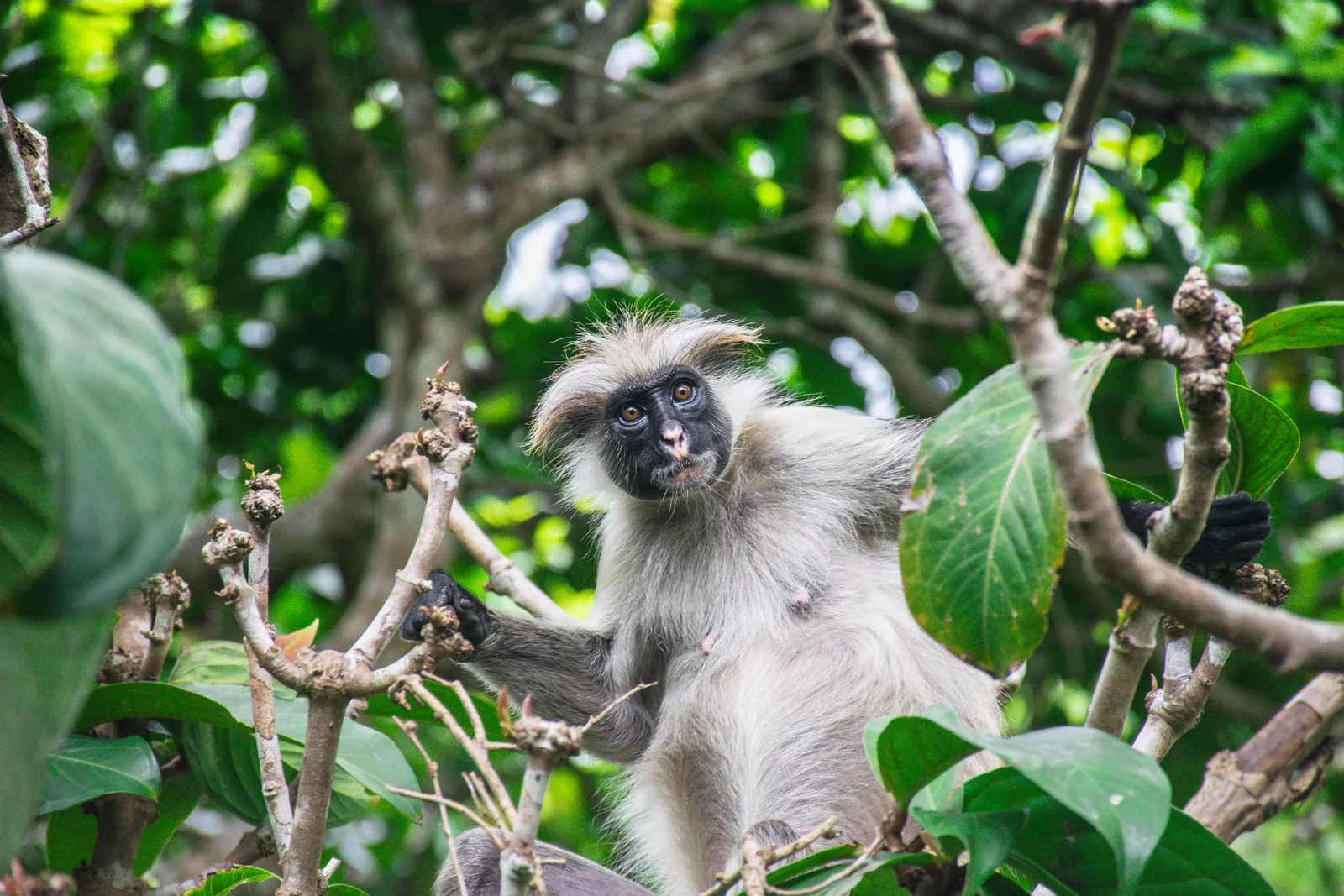
Photo: Ákos Helgert, via Pexels
Tanzania · Zanzibar · Forest & reef
Jozani and Mnemba
Zanzibar's wild side is small, specific and easy to love: the last tall forest on the island, full of monkeys found nowhere else, and a reef atoll offshore where turtles graze over coral. Both reward quiet, patient, hands-off watching.
Jozani: the forest that stayed
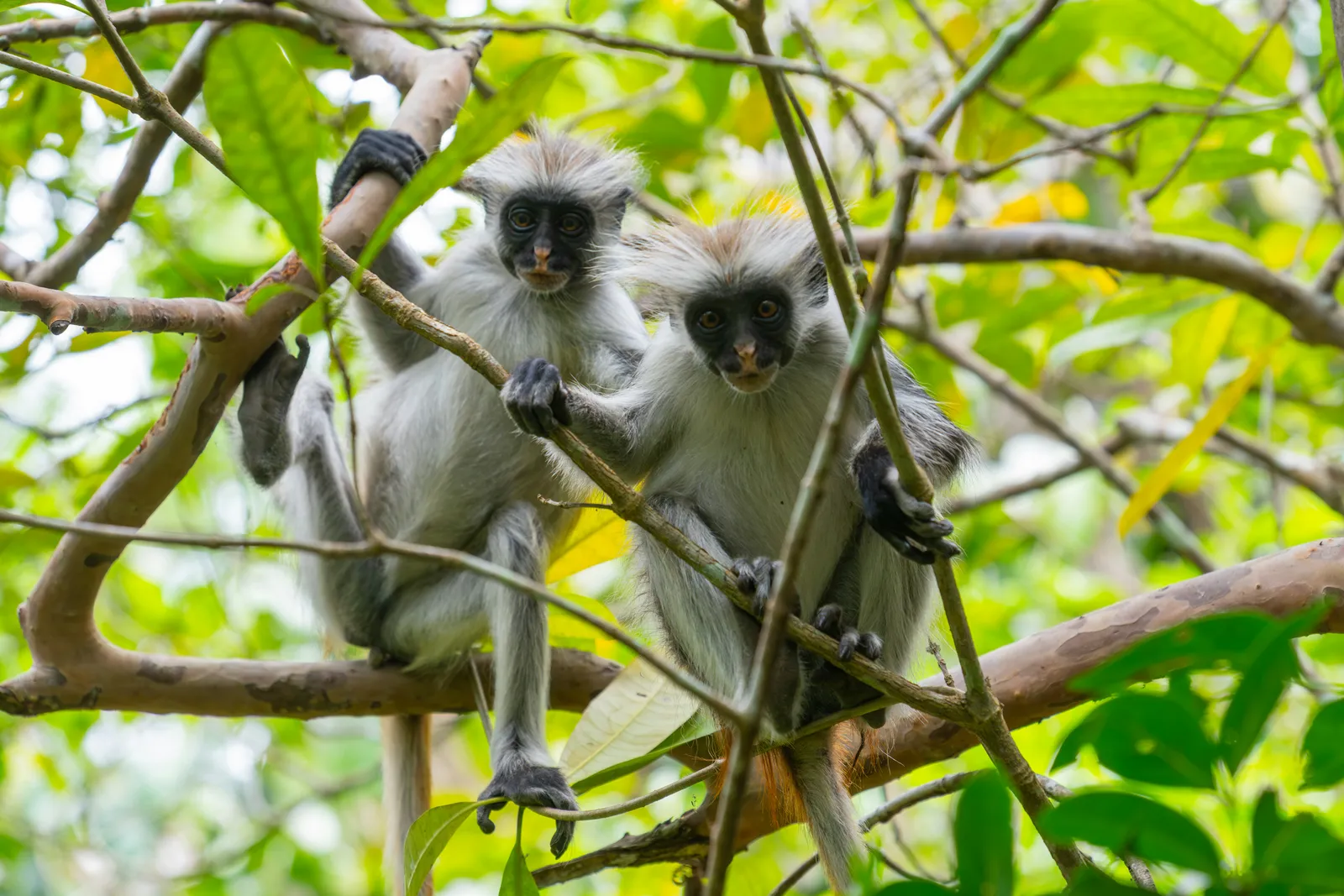
Jozani Chwaka Bay is Zanzibar's only national park: a remnant of the groundwater forest and mangrove systems that once clothed much of Unguja. Its signature resident is the Zanzibar red colobus, a monkey found wild nowhere else on Earth — patchy populations survive here and in a few scattered pockets of the island, and the park is where you are most likely to sit within metres of one.
The walk is short and level: forest trails, then a boardwalk out over the mangroves where the roots stand knee-deep in brackish water and crabs tick across the mud. Combined with the drive from Stone Town, it is a half-day, and it pairs naturally with an afternoon on the east coast, which begins just beyond the park's edge.
Watching the monkeys properly
The colobus have been studied here for decades and barely mind people, which is exactly why the etiquette matters. Stay with your guide, keep to the marked trails, and let the troop set every distance: no touching, no feeding, no calls or clicks to turn their heads, no holding out food or hands. Sykes monkeys share the forest and are bolder — the same rules apply twice over, because fed monkeys become problem monkeys.
The honest framing: Jozani is small, and its wildlife survives because the community around it earns from guarding it. Your entry, arranged within your operator's package, is part of that economics. Quiet interest protects the place; shortcuts do not.
Mnemba and the reef
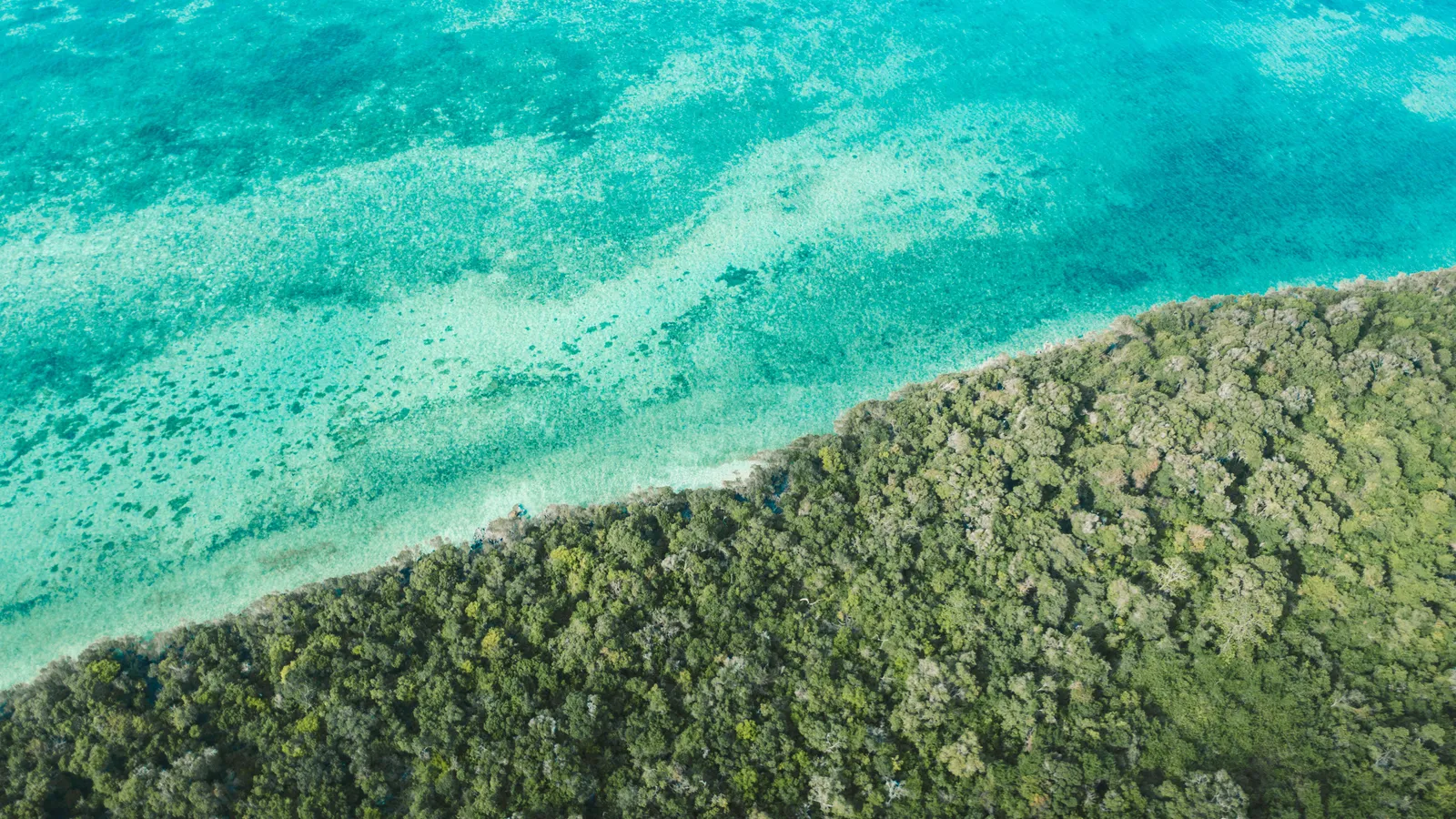
Off the northeast coast, Mnemba Atoll is a private island ringed by a protected reef — Zanzibar's signature snorkelling and diving water. Turtle sightings are the draw: green turtles graze the shallows and nest on the region's beaches, alongside reef fish in densities the mainland parks cannot match. Boats run from Matemwe and the north-coast beaches, timed to the morning before the wind rises; your operator books the trip, gear and park permissions as part of the stay.
Reef manners are the same on water as in the trees: nothing touched, nothing stood on, nothing fed. Coral is alive, fins break it faster than hands do, and the good crews brief you before you get wet. If a boat promises crowds, close contact or feeding, choose another — the reef does not need it, and neither do you.
- Morning boats, calm water — afternoons blow out with the trade wind.
- Turtles, reef fish, occasional dolphins: watch, never chase.
- No touching, no standing, no feeding — on coral or creatures.
Dolphins, and honest watching
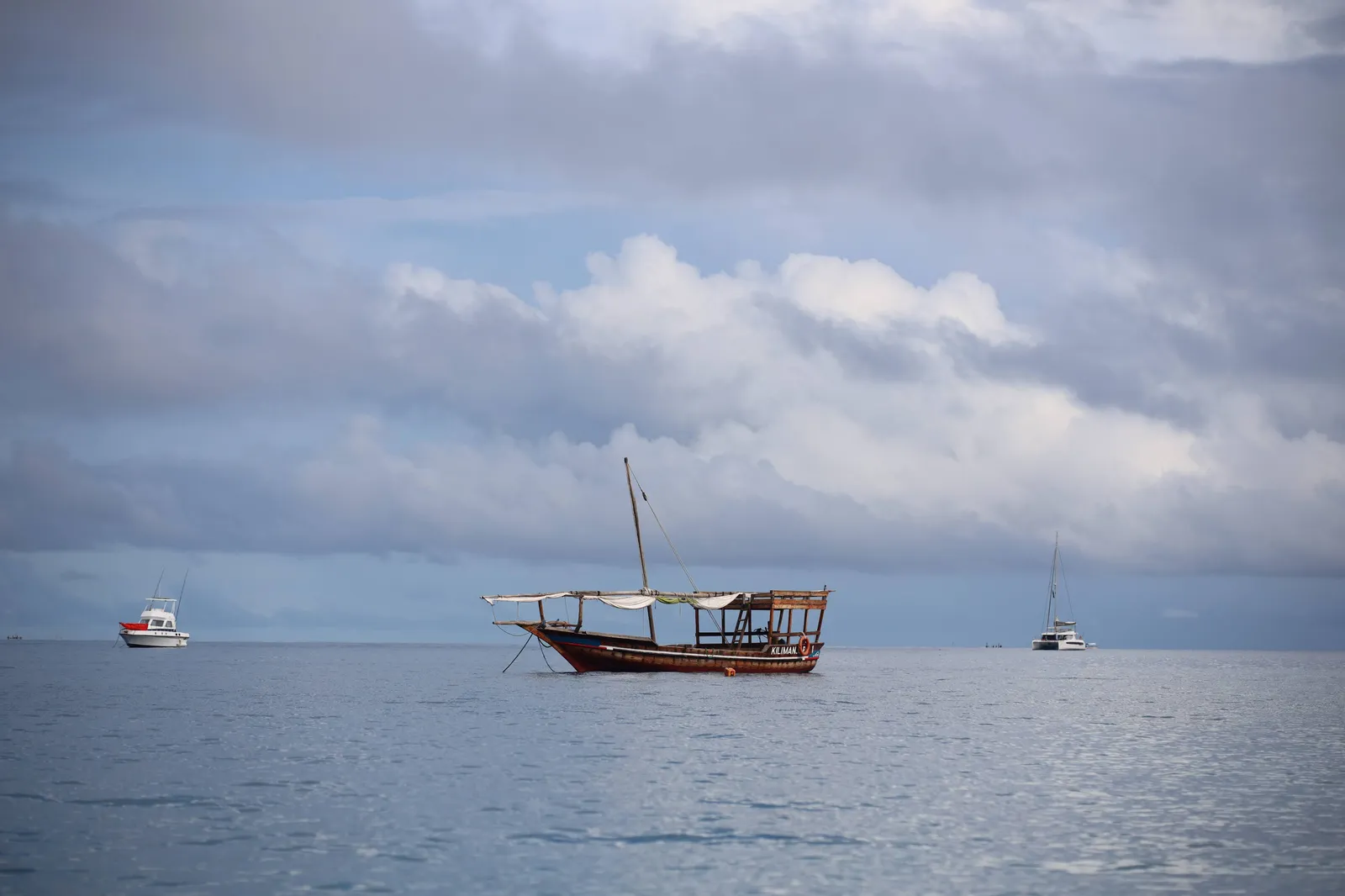
Off the southern peninsula around Kizimkazi, boats run out to find dolphins most mornings. The honest picture: the reliable trips are the ones that keep the engine distance and let the animals decide, and the best operators follow the local codes on how many boats may sit with a pod. Bottlenose and humpback dolphins live here year-round — commonly said, in every charter's brochure — and humpback whales pass the deeper water around July to September on their migration, likewise commonly said.
The rules your guide will repeat, and that this guide endorses: observation only. No touching, no feeding, no crowding a pod, no swimming into it. The ocean provides the encounter or it does not; a respectful miss beats a staged minute.
Keep reading