← Zanzibar ← The Tanzania guide
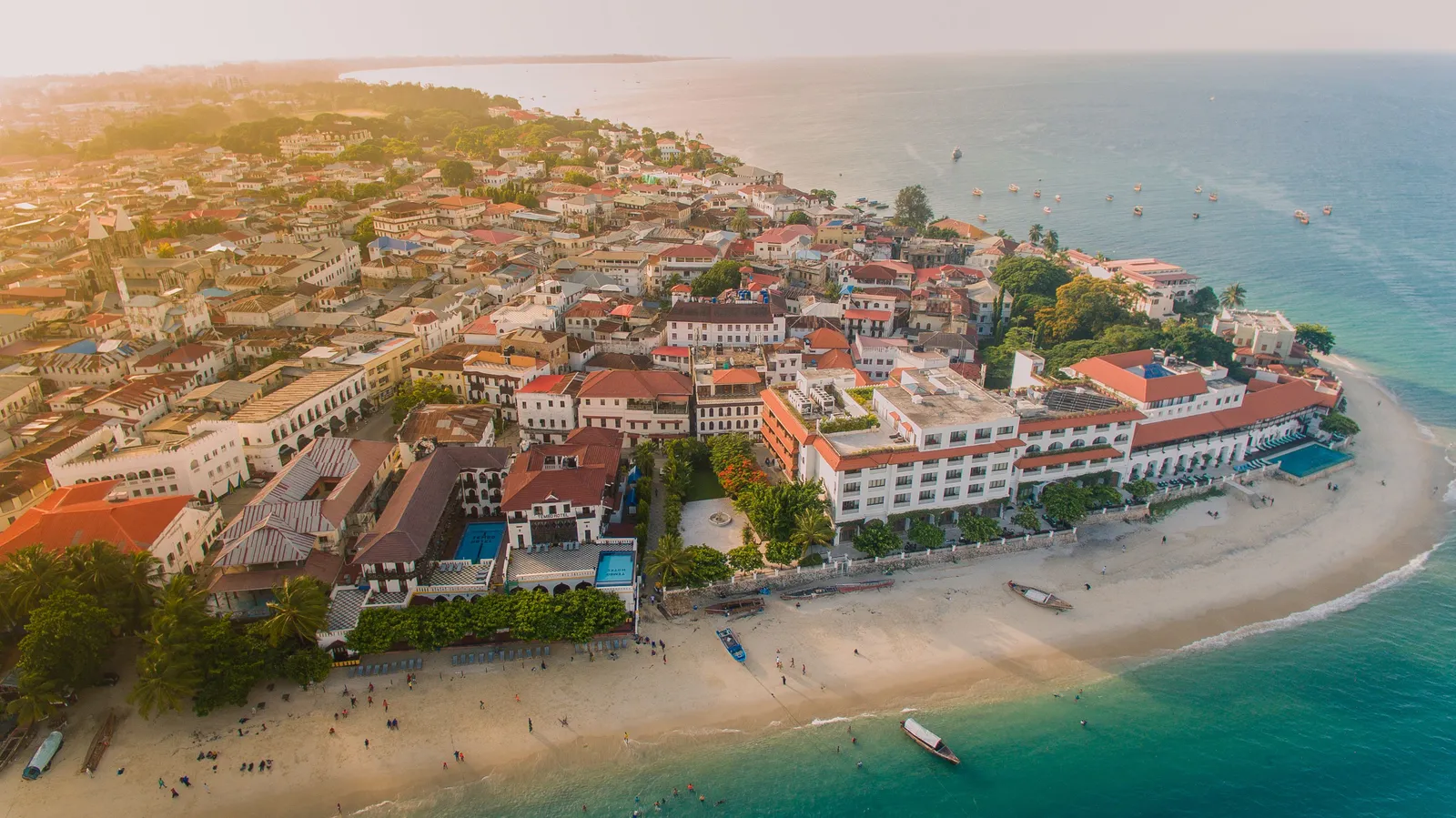
Photo: George John, via Pexels
Tanzania · Zanzibar · Stone Town
Stone Town
A coral-stone city built by three continents' worth of traders, ruled by sultans, enriched by cloves and stained by the slave trade. It is the most layered old town in East Africa, and it rewards travellers who read it slowly.
Arriving in the stone city
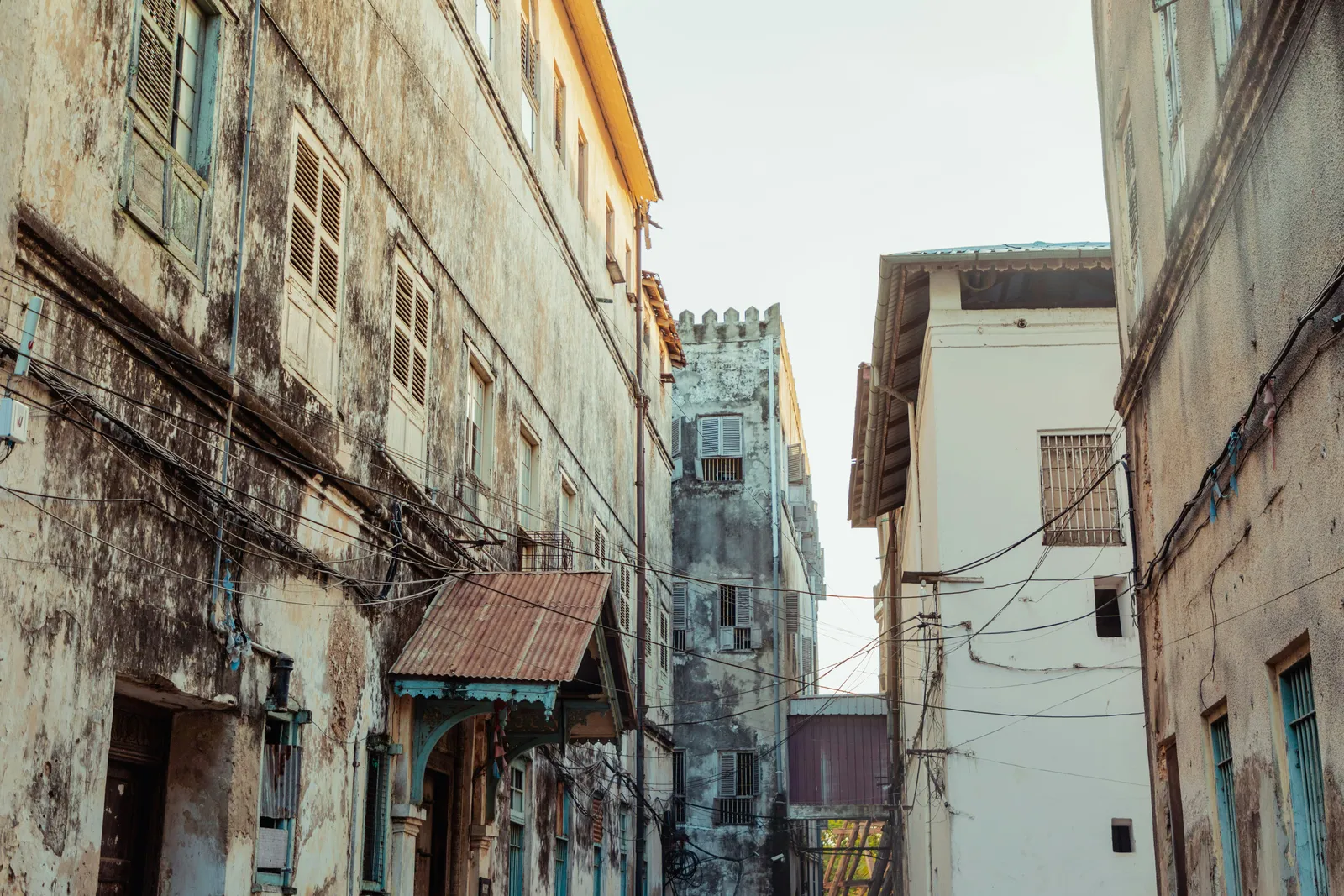
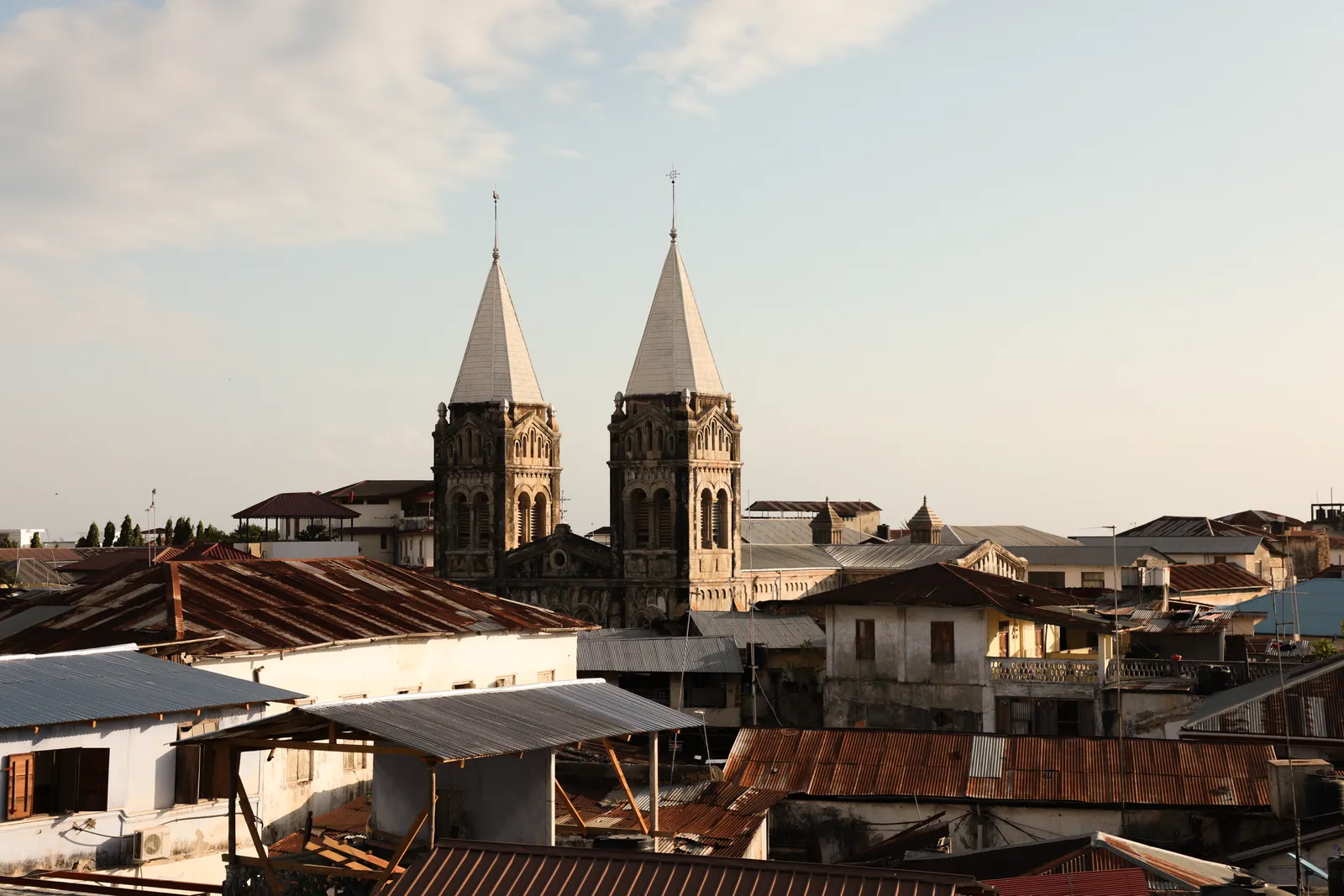
Stone Town is the old heart of Zanzibar City: a tight weave of coral-stone houses, carved doors and narrow lanes on the west coast of Unguja, fronting a harbour where dhows have berthed for centuries. UNESCO inscribed it as a World Heritage Site in 2000, one of the few surviving historic Swahili trading towns in East Africa. Streets were laid out for donkeys and monsoon winds, not cars; some lanes run shoulder-width, and shade is engineered rather than accidental.
Give it two nights at the end of a safari rather than a rushed afternoon. Mornings belong to the markets and the seafront; late afternoon, when the heat drops and the light turns bronze along Mizingani Road, is when the city is at its best. Your operator arranges the transfer from the airport; most hotels inside the old town are a short walk from where vehicles can park.
A thousand years of Indian Ocean trade
The Swahili coast has traded across the Indian Ocean for roughly a thousand years: Bantu farming and fishing settlements that grew wealthy on monsoon sailing seasons, absorbing Persian, Arab and Indian merchants, languages and food along the way. The very word Swahili comes from the Arabic for coast. Stone Town is the best-kept monument to that world, and its architecture shows it — coral-rag walls, inner courtyards, Indian-style balconies and Omani-style flat roofs stacked within a few steps of each other.
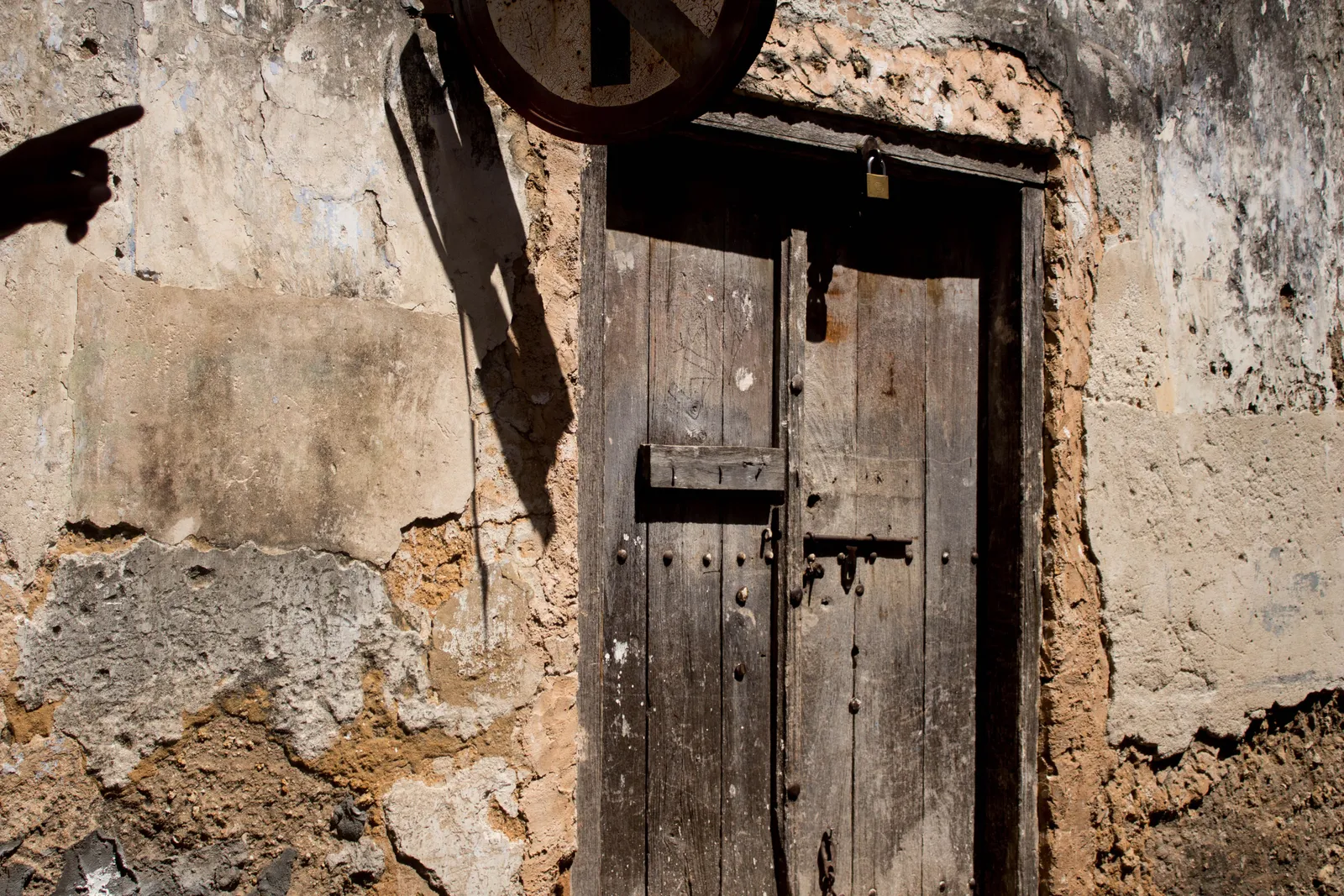
Read the doors while you walk. The heavy carved portals with brass spikes and lotus and chain motifs announced a household's status and faith — Indian carvers, Omani patrons, Swahili idiom. The great carved door is the city's signature, and the finest examples are free to see on any lane.
The sultans and the clove boom
In 1840 the Omani ruler Seyyid Said moved his capital from Muscat to Zanzibar, making a Gulf dynasty into an East African one. Cloves, planted at scale from the early nineteenth century, made the island rich — by mid-century Zanzibar supplied most of the world's cloves and the sultans reigned over a trading empire that reached deep into the mainland.
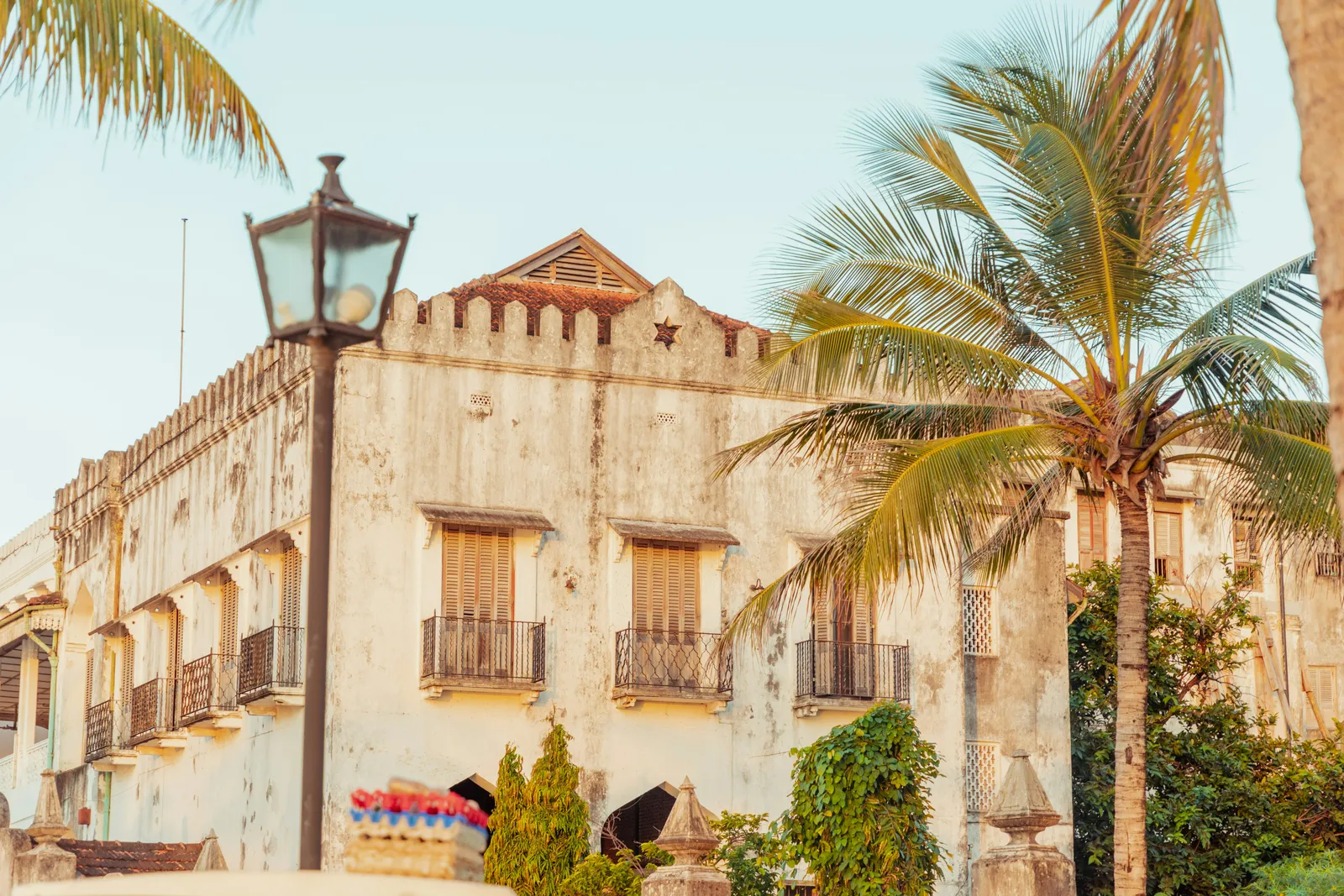
The seafront palaces carry the story. The House of Wonders (Beit al-Ajaib) went up in 1883 as a ceremonial palace for Sultan Barghash and was the island's first building with electricity and an elevator — commonly said, and repeated in every good guide. It was badly damaged by a partial collapse in December 2020 and has been closed since; its great facade and seafront portico still anchor the waterfront. The Palace Museum next door housed the sultans until the 1964 revolution and is open as a museum.
The slave trade, told plainly
Zanzibar grew rich as the last great open slave market of East Africa. Under the Omani sultanate, enslaved people were brought from the mainland, held in cellars around the market, and shipped to plantations and households across the Indian Ocean world until the trade was abolished under British pressure in 1873. Any honest account of the island's beauty starts here; brochures usually start elsewhere.
The site itself is now handled with care. Christ Church Anglican Cathedral, consecrated in 1874, stands on the market's exact spot, and beside it a memorial by the sculptor Clara Sörnäs marks the suffering in stone figures chained in a pit. A small exhibition nearby documents the trade's scale and mechanics. Visiting is sobering and worthwhile; go with a guide who will not soften it.
The walk, stop by stop
Stone Town is compact enough to walk end to end in a morning, and deep enough to fill three. This sequence, roughly north to south and back, covers the buildings that matter and the life between them. A guide turns it from a stroll into a history lesson; go at least once with one.
- Forodhani Gardens — the seafront lawn that becomes a street-food market every evening.
- Old Fort (Ngome Kongwe) — an early-1700s Omani fort on the site of a Portuguese church; today a cultural centre and craft stalls.
- House of Wonders — the sultan's 1883 showpiece, closed since its 2020 collapse but monumental from outside.
- Palace Museum — the sultans' home until 1964, now a museum of their era.
- Old Dispensary — a flamboyant 1887 building paid for by Zanzibar's Indian merchant community, all carved balconies and stained glass.
- St Joseph's Cathedral — a French-built Gothic cathedral of 1893–98, spires visible from the harbour approach.
- Christ Church and the slave market memorial — the island's hardest history, handled with dignity.
- Darajani Market — the main bazaar since the early 1900s: spices, fish, octopus and daily life in full voice.
- Caravan Serai — the inn that once housed traders arriving by caravan from the African interior.
- Hamamni Persian Baths — the island's first public baths, built in a Persian style for Sultan Barghash.
- Tippu Tip's house — the home of the era's most infamous trader, Hamed bin Muhammed el-Murjebi.
- Jaws Corner — a tiny square with carved shark jaws over the bench where the neighbourhood argues.
- Africa House — the former English Club of the colonial era, now a hotel with a famous sunset terrace.
- Kelele Square — a palm-shaded pocket of Shangani, named for the noise of children at play.
- Freddie Mercury's birthplace — the modest Kenyatta Road building where Farrokh Bulsara was born in 1946.
- Peace Memorial Museum — a domed 1925 hall built as a 'temple of peace' after the First World War.
Lanes, life and manners
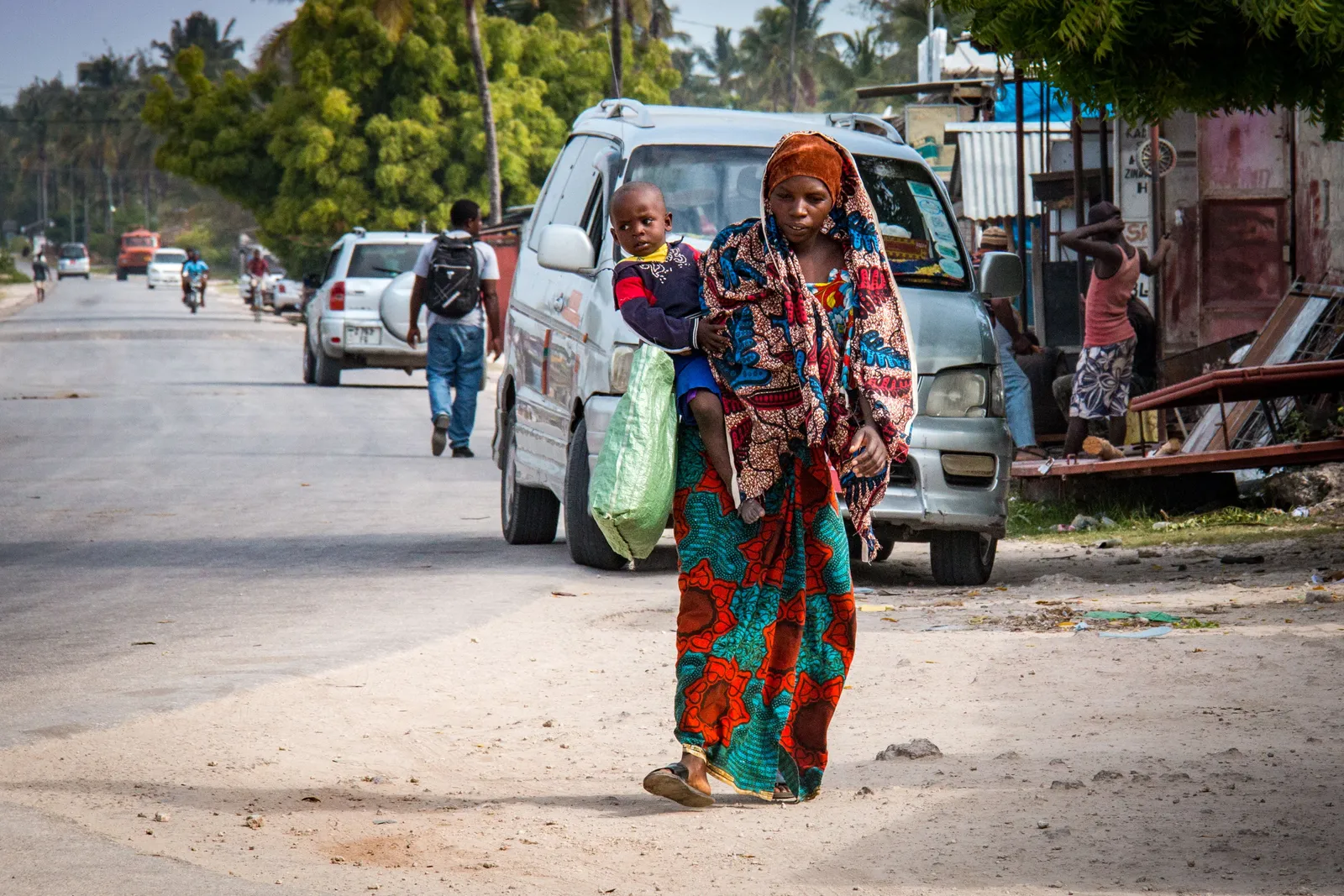
Between the monuments, Stone Town is simply lived in: children racing through Jaws Corner, laundry strung between balconies, taarab music leaking from a doorway, fish landed a street from the fish market. It is a working Muslim city — dress modestly away from hotel pools, cover shoulders and knees in the lanes, and during Ramadan be discreet about eating and drinking in daylight. Ask before photographing people; the answer is often yes, and the conversation is worth more than the picture.
Evenings pull everyone to the water. Forodhani's market grills fish and stacks Zanzibar pizza; the seafront fills with families; the sunset DHOW cruise boats slip out of the harbour. Eat where the queues are local, and let the operator's evening suggestions save you the trial and error.
Keep reading